

Chongqing Homar Technology Co., Ltd. is a supplier specializing in the design, manufacture and distribution of hand tools and hardware products. The main products include various pliers, hammers, wrenches, garden tools, construction tools, and safety tools. Our products have been exported to more than 80 countries and regions around the world, which are produced under strict quality control, and with relevant certificates and test reports.
Rich Experienced
Our more than 80 partners have many years of experience in product manufacturing and marketing, and can promptly connect, follow up and provide feedback on any of your product needs. Here you can find wholesale hand tool kits in various sizes and specifications and get customization services.
High Productivity
Our factory covers an area of more than 200,000 square meters and contains 6 production lines. It can supply your products as quickly as possible and provide expedited logistics and transportation services.
Quality Assurance
Our factory production process has passed ISO 9001: 2008, IS09001: 2000, ISO14000 and other certifications. Our products basically comply with EN standards, ANSI and other standards.
Wide Product Range
Our product range is complete, including hammers (claw hammer, ball hammer, rubber hammer), pliers (wire cutters, needle nose pliers, wire strippers, pipe wrench), measuring tools (tape measure, tape measure, belt ruler, ruler), as well as other hardware tools.
-
![Small Axe For Chopping Wood]() Add to Inquiry
Add to Inquiry -
![Firefighter Crash Axe with wooden handle]()
Firefighter Crash Axe with wooden handle
Add to Inquiry -
![Fire Axe With Insulated Handle]()
Fire Axe With Insulated Handle
Add to Inquiry -
![Log Cutting Axe]() Add to Inquiry
Add to Inquiry -
![Modern Fire Axe]() Add to Inquiry
Add to Inquiry -
![multi purpose fire axe with Fiberglass Handle]()
multi purpose fire axe with Fiberglass Handle
Add to Inquiry -
![Truckman Fire Axe]() Add to Inquiry
Add to Inquiry -
![Best Axes For Splitting Firewood]()
Best Axes For Splitting Firewood
Add to Inquiry -
![Manganese Steel Fire Axe]() Add to Inquiry
Add to Inquiry -
![Best Small Axe For Chopping Wood]()
Best Small Axe For Chopping Wood
Add to Inquiry -
![Wood Chopping Competition Axe]() Add to Inquiry
Add to Inquiry -
![Short Handle Fire Axe]() Add to Inquiry
Add to Inquiry


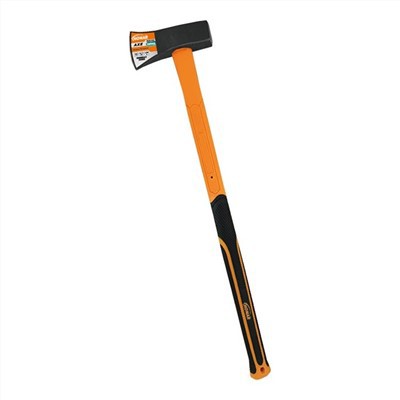


An axe is an implement that has been used for millennia to shape, split, and cut wood, to harvest timber, as a weapon, and as a ceremonial or heraldic symbol. The axe has many forms and specialized uses but generally consists of an axe head with a handle, also called a haft or a helve. Also, the axe is a type of wedge, or dual inclined plane, which splits the wood into two parts by the pressure concentration at the blade. The handle of the it also acts as a lever allowing the user to increase the force at the cutting edge.
Features of Axe
Durable Material
Our ax heads are made of forged steel and are reinforced with heat treatment and feature a corrosion-resistant coating on the head to prevent rust and wear. Their blades are sharper than traditional shafts and are easier to remove from wood.
High Safety
Their shock-absorbing handles have a textured anti-slip design that prevents accidental drops when in use and reduces hand strain and prevents excessive impact damage.
Multipurpose
Used for firewood, yard work and lawn clearing, our ax can chop down trees and break apart firewood for lighting next to the fire pit. It chops deeper with every swing and get more done faster.
Efficient Work
Featuring an ergonomic look and an extended handle, these axes have the perfect balance and power-to-weight ratio to increase swing speeds to multiply power and work more efficiently.
Application of Axe
Chopping Wood
The most common use for an axe is chopping wood. With a properly sharpened blade, an axe can make quick work of large logs and branches, turning them into firewood or lumber for construction projects. To chop wood effectively, be sure to have a solid and stable chopping block to prevent the log from rolling or shifting as you swing.
Building Shelters
In addition to producing lumber, axes can also be utilized in the construction of shelters when out in the wilderness or during survival scenarios. The sharp edge of the axe can be used for cutting and shaping branches, while the blunt side can serve as a makeshift hammer for driving in stakes or securing beams together. When building a shelter with an axe, be mindful of safety precautions like maintaining a safe striking distance from others and always chopping away from your body.
Clearing Brush
When trails become overgrown, campsite spaces need clearing, or land needs to be reclaimed for cultivation, an axe is a handy tool for getting rid of dense brush and vegetation. Using the axe head like a pickaxe or mattock can help you clear through thickets and remove small shrubs with ease.
Self-Defense
Though not its primary purpose today, the axe was historically used as a weapon for self-defense and warfare purposes. In extreme circumstances where other tools are unavailable or unhelpful against threats such as wild animals or criminals, an axe can be wielded defensively to protect oneself.
Main Types of Axe

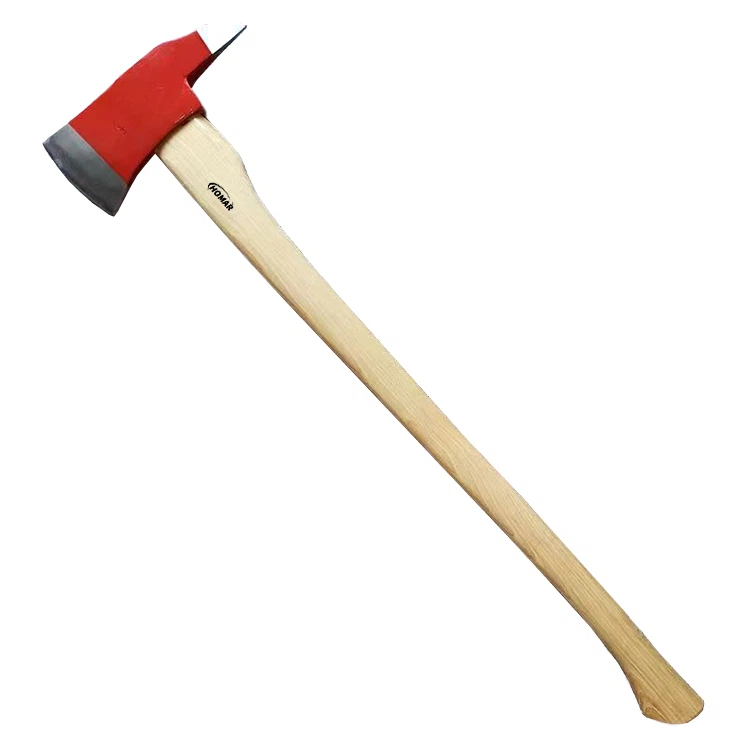


Felling Axe
Felling axes are one of the more traditional axe styles that are specifically made for felling full-size trees and chopping through thick logs. These tools have a long, curved handle that is traditionally made of wood, though modern felling axes may also have lightweight, durable fiberglass handles that are easier to pick up and swing. The head of a felling axe typically weighs between 2 to 4 pounds and it has a flared shape with a sharp, thin tip for splitting wood fibers.
These axes are a good option to have around the home for maintaining trees on the property, removing rotten trees, and chopping firewood.
Hatchet
While large felling axes are made to be used with two hands, a hatchet is a one-handed tool for chopping, splitting, and felling small trees. The compact size makes it easy to pack a hatchet into a bag to take hiking, climbing, camping, or fishing, and these tools are typically lighter than other axes, allowing them to be used for longer periods before fatigue begins to set in.
Hatchets generally weigh about 1 to 2 pounds and have wood or fiberglass handles. Some hatchets may also have full-tang designs that improve the control and power of the user. The tang is the piece of metal that extends from the head of the hatchet into the handle. Partial-tangs end as soon as they enter the handle, while a full-tang extends completely through the handle.
Splitting Maul
These heavy-duty axes can be used with a felling axe to quickly chop and split wood. While the shape and appearance of a splitting maul may give the impression that they can be used to fell trees, these axes are actually intended for a downward swing.
Simply set up a wide log in a vertical position, then bring the splitting maul down onto the top of the log to cut through the wood and split it into pieces. They also have a wedge side that can be used to break up kindling into smaller pieces, making it easier to quickly and effectively start a campfire. The axe head of a splitting maul weighs about 8 pounds, and it’s the weight of the axe that does most of the work so a proper swing is required to use the weight to its greatest effect. Off-balance swings tend to use more energy with less effect.
Hudson Bay Axe
The goal when designing a Hudson’s Bay axe was to blend the tree felling power of a felling axe with the compact size of a hatchet so that the tool would be easier to carry, but also effective at felling trees in the Canadian wilderness. These axes can be swung with one hand or both hands to fell small trees, chop wood, and split kindling to make a fire. They generally have a curved hickory handle and one blunt side on the axe head that can help to drive tent pegs or even dig holes.
Pickaxe
A pickaxe isn’t technically an axe, despite the name. Instead, it is a type of digging tool that is commonly used in gardening. However, due to modern media, it is more commonly recognized for its potential as a mining tool. One side of the pickaxe has a pointed pick that pierces hard dirt and clay, making it easier to remove with a shovel, while the other side has a curved or flat adze head that can pry rocks from the ground or dig furrows in the soil.
These tools are excellent for home gardening, making quick work of dry, hardened soil and allowing DIY gardeners to effectively transform their gardens by removing rocks, tilling the soil, and breaking up clumps of clay.
Dayton Axe
A Dayton axe is actually a type of felling axe that was named after Dayton, Ohio, when it was modified to have a specific head shape and style. These axes are full-sized felling axes that were once regularly used to fell hardwood trees.
The Dayton axe head pattern has a long, curved blade with a gentle flare and a balanced shape that makes it easier to swing the axe sideways to cut against the grain of the wood.
Adze
The purpose of an adze is not for splitting, chopping, or felling like a traditional axe. Instead, these tools are best used for woodworking projects where they can scale bark, shape timber, trim wood, and hollow out logs. An adze may also be combined with another tool to create a multipurpose device, like a pickaxe, which often features a pointed pick on one side and an adze or chisel on the other side. Adzes vary in length, weight, and even blade shape, but they are usually held in one hand and they all feature a horizontal blade, similar to a hoe.
Carpenter’s Axe
Don’t take a carpenter’s axe into the woods. These tools are best reserved for fine woodworking, construction, and demolition projects where the finely honed edge can make accurate cuts in the wood without causing needless damage to the project as a whole. Some carpenter’s hatchets are also equipped with a groove built into the blade that can be used for pulling nails, while others may have a blunt hammer head on the opposite side of the blade, allowing users to quickly drive nails or wooden dowels.
Double Bit Axe
These classic double bit axes were once very popular because they combined the felling power of a felling axe, with the chopping and splitting power or a splitting maul by having two sides to the axe. The sharp side of the axe was specifically intended to fell trees, while the blunt side of the axe head was better for chopping logs and splitting kindling. Many people now use either a felling axe or a splitting maul, but for those with heavily forested properties or in the bush, a double bit axe is a good option to help maintain the growth of the trees and split wood for the fireplace.
Fire Axe
The sharp axe blade is used to cut through wood and other materials, like a door or broken debris, while the other side of the axe is an adze blade that is particularly useful for digging dirt lines to block the path of spreading fires. A fire axe may have a pointed pick instead of an adze blade. This pick makes it easier to break through tough materials, like brick, mortar, and wooden beams or studs so that rescue workers can move through walls instead of having to clear a collapsed doorway.
Tactical Axe
These modern tools are specifically designed as multipurpose tools that can perform the basic function of an axe or hatchet with a sharpened chopping blade. They may also be used for digging holes or hammering tent pegs, and some products are tough enough to be used in place of a pry bar. However, they are just as effective at chopping wood for a campfire or even as a backup cooking tool, as long as the blade is properly washed before coming into contact with food.
Components of Axe
Axe Head
The axe head is the part of the axe that does the cutting. It’s typically made from steel and can be sharpened to a fine edge. There are two main parts of the axe head: the bit and the eye.
●The bit is the sharpened edge of the axe head that makes contact with the wood.
●The eye is the hole in the axe head where the handle is inserted.
●Felling axe head: A large, heavy axe head with a long handle, used for cutting down trees.
●Splitting axe head: A wedge-shaped axe head with a broad blade, used for splitting logs.
●Hewing axe head: A flat, broad axe head with a straight blade, used for shaping logs.
Axe Handle
The axe handle is the long, straight part of the axe that you hold onto while using it. It’s usually made from wood.
●The grip is the part of the handle that you hold onto with your dominant hand.
●The knob is the wider part of the handle at the end opposite the axe head. This provides a counterbalance to the weight of the axe head and helps keep your hand from slipping off the handle.
●Straight handle: A straight, cylindrical handle that provides a balanced grip.
●Curved handle: A handle with a slight curve that conforms to the user’s grip for increased comfort and control.
●Tapered handle: A handle that narrows towards the head, providing a better grip and reducing hand fatigue.
Blade
The blade is the part of the axe head that extends from the bit to the eye. It’s the part of the axe that makes contact with the wood and does the cutting. The blade can be sharpened to a fine edge to make cutting easier.
Some common types of blade shapes include:
●Convex blade: A curved blade that is thicker in the middle and tapers towards the edge, providing a strong cutting edge.
●Straight blade: A blade with a flat edge that is easy to sharpen and provides clean cuts.
●Beveled blade: A blade with a sloping edge that is designed for chopping and splitting wood.
Poll
The poll is the back end of the axe head opposite the bit. It’s usually flat and can be used for a variety of tasks, such as driving in tent stakes or splitting wood.
Factors to Consider When Choose Axe

01.Handle Length
02.Axe Head Weight
If you’ll be carrying or traveling with the axe, choose the lightest and most compact option to provide sufficient chopping power.
03.Handle Material
04.Handle Shape
05.Varnished Vs. Unvarnished
06.Price Vs Quality
07.Axe Size
Process of Axe
Forging
The first step is to chisel a hole in a block of mild low carbon steel. This is where the eye will take place. Using a mandrel the eye is stretched into the needed size. Next a notch is chiselled in one end of the billet and a wedge shaped peace of alloyed tool steel is inserted in it to form the harder cutting edge. Now the axe is heated to a dark yellow color and borax is sprinkled on it. Melted borax liquefies the oxidation scale and washes it out of the welding seam. Once again the axe is heated, this time to a bright yellow glow, and forged so that the two pieces of steel forge weld together. The blacksmith then forges the axe’s head into a shape and grinds the rough edge.
Heat Treatment/Grinding/Sharpening
Annealing is needed to remove the inner stresses in the steel formed during the forging. To do that axe is heated to 850 degrees Celsius and cooled very slowly to room temperature. After that the axe goes to second heat treatment step which is normalizing. For this the axe is heated again, this time to an 800 degrees Celsius, our makers mark is stamped into the steel and the axe is cooled down in the air. Normalizing prepares the structure of the steel for the next step; hardening. Again the axe goes into a furnace and is heated to 800 degrees Celsius. Then the axe is quenched in mineral oil and water. Now the axe is hard enough, but is very brittle so it needs to be tempered. For the last time the axe is heated to 220 degrees Celsius, and is held at that temperature for one hour. After the axe is tempered to Rockwell 58-59 (HRC) and the steel is hot enough, a mixture of bees wax, linseed oil and turpentine is applied to the axe head.
Handle Making
Each axe handle is made individually for each axe head to achieve a perfect fit. To start, a knot-free piece, of locally harvested and kiln dryed (6-8% of moisture) Red Elm wood is chosen and then marked out using a template. We use only parallel grained wood to the axe eye, if the grain of the wood will be perpendicular to the axe eye - it will brake fast and will not last long. The rough shape of the handle is sawn using a bandsaw. Next the handle is shaped using a drawknife. Axe eye dimensions are marked on the top of the handle and the handle is shaved to almost fit the eye. Final finishing is carried out using sandpaper to ensure a close fit. Then the axe handle is tightly punched into the axe head and locked with the wooden wedge which is glued in with an epoxy wood glue. A small steel wedge is hammered into the wooden wedge to lock the axe head vertically. Now the axe has been laid in the Tung oil bath for 24 hours, this fills the wood pores with the oil, and swells the handle so after a week the oil dries and polymerizes and wood is fully protected and it will never shrink.
Our Certificate Photo

Our Factory Photo

Frequently Asked Questions of Axe
Q: What is the use of axe?
Q: Is an axe and a hatchet the same thing?
Q: Why carry an axe?
Q: Are there different types of axe?
Q: What are the parts of an axe?
Q: What do you call the head of an axe?
Q: How do you choose the right size of axe for your needs?
Q: How do you sharpen an axe?
Q: What is one way to use axe properly?
Q: How do you maintain an axe?
Q: How often should you oil an axe?
Q: What is the difference between a splitting axe and a felling axe?
Q: Can you use a splitting axe to fell a tree?
Q: What is the use of axe in survival?
Q: How do you get an axe head off?
Q: What materials are axe heads commonly made from?
Q: How do you replace an axe handle?
Q: What are some safety precautions to take when using an axe?
Q: How do you clean an axe?
Q: What are some common mistakes to avoid when using an axe?
We're professional axe manufacturers and suppliers in China, specialized in providing hand tools and hardware. We warmly welcome you to buy high quality axe in stock here from our factory. Contact us for more details.
Cr mo Adjustable Bolt Cutter, Multi function Combination Pliers For Fishing, Joint Pliers