

Chongqing Homar Technology Co., Ltd. is a supplier specializing in the design, manufacture and distribution of hand tools and hardware products. The main products include various pliers, hammers, wrenches, garden tools, construction tools, and safety tools. Our products have been exported to more than 80 countries and regions around the world, which are produced under strict quality control, and with relevant certificates and test reports.
Rich Experienced
Our more than 80 partners have many years of experience in product manufacturing and marketing, and can promptly connect, follow up and provide feedback on any of your product needs. Here you can find wholesale hand tool kits in various sizes and specifications and get customization services.
High Productivity
Our factory covers an area of more than 200,000 square meters and contains 6 production lines. It can supply your products as quickly as possible and provide expedited logistics and transportation services.
Quality Assurance
Our factory production process has passed ISO 9001: 2008, IS09001: 2000, ISO14000 and other certifications. Our products basically comply with EN standards, ANSI and other standards.
Wide Product Range
Our product range is complete, including hammers (claw hammer, ball hammer, rubber hammer), pliers (wire cutters, needle nose pliers, wire strippers, pipe wrench), measuring tools (tape measure, tape measure, belt ruler, ruler), as well as other hardware tools.
-
![Ball Peen Hammer With Wooden Handle]()
Ball Peen Hammer With Wooden Handle
Add to Inquiry -
![One Piece Claw Hammer]() Add to Inquiry
Add to Inquiry -
![Carbon Steel Stoning Hammer]() Add to Inquiry
Add to Inquiry -
![Hard Rubber Hammer]() Add to Inquiry
Add to Inquiry -
![Industrial Stoning Hammer]() Add to Inquiry
Add to Inquiry -
![3lb Hammer Cross Peen With Handle]()
3lb Hammer Cross Peen With Handle
Add to Inquiry -
![Cross Peen Hammer with Fiberglass Handle]()
Cross Peen Hammer with Fiberglass Handle
Add to Inquiry -
![3lb Cross Pein Hammer]() Add to Inquiry
Add to Inquiry -
![Industrial 2lb Cross Pein Hammer]()
Industrial 2lb Cross Pein Hammer
Add to Inquiry -
![Cross Peen Hammer With Wooden Handle]()
Cross Peen Hammer With Wooden Handle
Add to Inquiry -
![24 oz cross peen hammer with handle]()
24 oz cross peen hammer with handle
Add to Inquiry -
![Small Cross Pein Hammer]() Add to Inquiry
Add to Inquiry
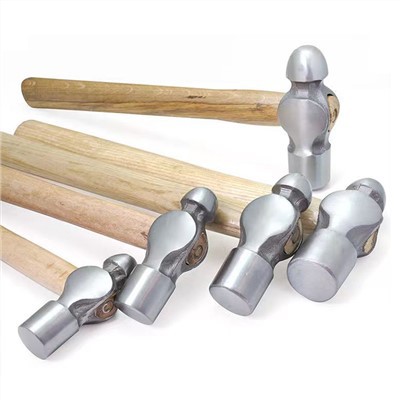


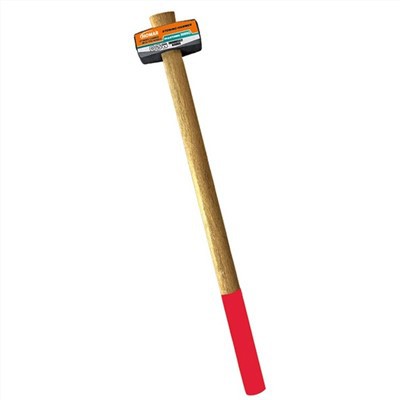
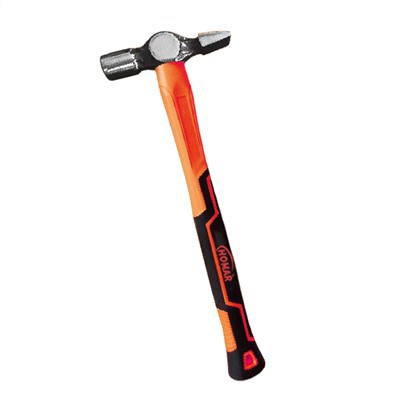


A hammer is a tool, most often a hand tool, consisting of a weighted "head" fixed to a long handle that is swung to deliver an impact to a small area of an object. This can be, for example, to drive nails into wood, to shape metal (as with a forge), or to crush rock. Hammers are used for a wide range of driving, shaping, breaking and non-destructive striking applications. Use of hammers and heavy mallets for demolition must adapt the hammer stroke to the location and orientation of the target, which can necessitate a clubbing or golfing motion with a two-handed grip.
Features of Hammer
Durable Surface
Our hammers feature a hand-polished solid steel head with a powder coating added to the metal surface to resist scratches that may occur during use.
Rich Specifications
These hammers come in a variety of sizes and head shapes, making them ideal for framing, demolition, nail prying, and more. And their longer handles provide greater impact, making your work easier.
Easy to Use
The other end of their head is equipped with a V-shaped magnetic nail remover, which makes it easier to remove fastened nails and ensures that the user's fingers are no longer injured.
Multipurpose
The heads of our hammers are easily interchangeable so they can be used as a multi-purpose hammering tool in most assembly applications including engineering, furniture, shop fitting, injection molding and more.
Application of Hammers
Nailing
A hammer is commonly used for driving nails into various materials such as wood or walls. This is one of the most fundamental uses of a hammer, enabling the user to fix objects together securely. The force applied to the nail by the hammer ensures a tight and secure fit.
Removing Nails
The claw end of a hammer is designed to remove nails efficiently. By leveraging the claw around the nail and applying a pulling force, users can extract nails from surfaces without causing significant damage. This feature is particularly useful in deconstruction or when correcting mistakes during building projects.
Breaking Objects
Hammers are instrumental in breaking hard objects like tiles, bricks, or concrete. The impact from a hammer can create fractures in these materials, allowing for controlled demolition or adjustment of structures. This is especially useful in renovation projects or when altering the layout of brick or tile arrangements.
Tamping
The flat face of a hammer can be used for tamping or compacting surfaces. This is useful in landscaping or construction where a level ground or surface is required. By repeatedly striking the ground, users can flatten uneven surfaces, preparing them for further construction or planting.
Furniture Assembly
Hammers play a vital role in assembling or disassembling furniture pieces. They can be used to insert dowels, adjust components, or dismantle assembled furniture. The versatility of a hammer makes it a valuable tool in furniture making and maintenance.
Crafting and Jewelry Making
Hammers are used in crafting and jewelry making for shaping, forming, and texturing materials. The controlled impact of a hammer can modify the appearance and structure of metals and other materials, allowing artisans to create intricate designs and unique pieces.

Main Types Of Hammer
Claw and Framing Hammers
While these hammers all feature a round head for driving nails, the claw end is every bit as useful for prying, splitting wood, tearing drywall and other small demolition tasks. The claw is curved on a claw hammer, and straight on framing hammers.
●Woodworking
●Prying
●Finishing
●Framing
●Splitting
●Small demolition
Ball Peen Hammer
The ball peen hammer was originally designed for peening, or shaping metal materials by hammering. One end of the head is ball-shaped for this purpose. The other end is flat and is used for driving.
●Metalworking
●Rounding edges
●Punching and riveting
Dead Blow Hammer
These hammers are designed to strike surfaces with great force, and dead blow means they won’t rebound after striking.
●Automotive applications
●Setting joints
●Installing floor boards
Engineering and Drilling Hammers
The heavy head of a hand drilling hammer is used to drive chisels and punches. These hammers typically feature a flat face with rounded edges and a wedged peen opposite the head.
●Driving
●Punching and chiseling
●Shaping and forging metal
Mallets
A mallet is a block on a handle, which is usually used for driving chisels. The head on a rubber mallet is made of rubber. These types of hammers deliver softer impact than hammers with metal heads. They are essential if your work needs to be free of impact marks.
●Shaping metal
●Fitting wooden parts
●Plasterboard
Chipping and Riveting Hammers
A mallet is a block on a handle, which is usually used for driving chisels. The head on a rubber mallet is made of rubber. These types of hammers deliver softer impact than hammers with metal heads. They are essential if your work needs to be free of impact marks.
●Shaping metal
●Fitting wooden parts
●Plasterboard
Sledge Hammer
Sledge hammers are larger than most hammers and feature a metal, mallet-like head. Heavier sledge hammers with longer handles are intended to be swung with both hands.
●Breaking stone
●Driving stakes
●Demolition
Soft-Face, Split-Head Hammers
Soft-face, split-head hammers with interchangeable heads are for use in projects that require force without marking the surface. Soft- face, split head hammers come with or without heads.
●Machining
●Metalforming
●Crafting

Which Hammer Handle is Best?
Steel Handled Hammers
Steel handles are the strongest of the bunch. It’s tough to beat a solid or welded piece of steel when it comes to overall strength. But steel is also the heaviest option, and that extra weight doesn’t necessarily mean that steel-handled hammers pack more punch. A lot of the hammer’s weight is down away from the strike point, so it doesn’t actually affect the striking power. Steel hammers are the worst offenders for causing vibrations that impact the user. Heavy vibrations can lead to repetitive strain injuries and other ailments. Because of their strength, steel-handled hammers are a favorite among masons and demo crews.
Fiberglass Handled Hammers
Fiberglass handles transmit less vibration than steel, but still more than wood. Electricians love fiberglass handles because they are non-conductive. Plumbers and mechanics tend to prefer fiberglass because a decent one can be had for not a lot of money.
Hammers with Wood Handles
Wood handles transmit less vibration than fiberglass and much less vibration than metal handles. Wood is also the lightest handle material, which means most of the weight is up in the head (where it counts). Wood handles can be replaced if they are damaged and can even be customized for those uber-particular hammer connoisseurs out there. Wood handles are strong, but not as strong as steel, so not the best option for demo work.
Process of Hammer
The first step of manufacturing a hammer is making the head. To do this, the manufacturer takes a piece of steel that requires it to be melted at nearly 1,200° – 1,300° temperatures. This way, the metal gets softened, and then it can easily be molded.
After the completion of the heating process, it is taken into 2 separate molds. One mold is usually fixed, and another mould is joined to a metal rod that can be spread against the mold. Until the hammerhead comes in a proper shape, this process is continuously done. Once the hammerhead comes in proper shape, the manufacturer gives a finishing touch-up to a few minor imperfections. After that, the hammer head gets the rest to cool off.
This step is to prepare the handle. A piece of wood is the primary material in this step. The wood piece should be cut off for a head-shaped feature. Once it is done, sanding down is inevitable for the wood pieces as well, as a slit need to be cut at the top of the handle, which requires a diagonal shape. After completing this, a sealing coat is used to treat and cover the wood pieces.
We are at the last step of the manufacturing process, where the manufacturer needs to combine the head and the handle using a wedge. Through the adze eye, the handle is pressed, and within the slit, the wooden wedge is driven. Once the handle is stretched, this wedge drives through it smoothly, and the hammed head takes its place gently in position.
However, it is mandatory to check this area of the hammer promptly to ensure it is not slackened or detached from its place. These steps are not very challenging, but keeping an eye on safety features is necessary.
Wear Protective Goggles
Always wear protective goggles when using a hammer. Hammering nails into wooden objects or surfaces can create shrapnel in the form of small and thin wooden splinters. As these splinters are released, they can strike your eyes. Fortunately, protective goggles will shield your eyes from splinters and other debris.
Inspect the Head
Prior to using a hammer, inspect the head to ensure it's not loose. All hammers consist of a head and a handle. Over time, the head can become loose, in which case it will longer be secured to the handle. When you strike a nail with the hammer, the head may fall off. If you perform a forceful blow, the head may go flying off the handle and towards your body. To protect against injury, avoid using any hammers with a loose or otherwise structurally unsound head.
Make Parallel Strikes
Another safety tip to follow when using a hammer is to make parallel strikes. If you're trying to drive a nail into a wooden object or surface, for instance, you should strike the nail so that the head of your hammer is parallel to the top of the nail. If you strike it at an angle, it may create shrapnel. Angled strikes can chip wooden objects and surfaces, resulting in injury-causing shrapnel.
Wear Gloves
Along with protective goggles, you should wear gloves when using a hammer. Most hammer-related injuries involve either the eyes or the hands. Wearing gloves won't make your hands immune to injury. They will, however, lower the risk of hand injury when hammering.
Choose the Right Size for the Job
Hammers come in many different sizes. To protect against injury, choose a hammer in an appropriate size for the job with which you intend to use it. If you're driving large nails into a wooden object or surface, you should choose a large hammer to accommodate the large nails. If the nails are small, on the other hand, choose a smaller hammer.
Our Certificate Photo

Our Factory Photo

Frequently Asked Questions of Hammer
Q: What is a hammer used for?
Q: What is the most commonly used hammer?
Q: What can I use instead of a hammer?
Q: What is difference between hammer and mallet?
Q: Can a hammer break a rock?
Q: What materials are hammers usually made from?
Q: What is a soft hammer called?
Q: How do you grip a hammer?
Q: What is the purpose of a hammer?
Q: Can a hammer be used for more than one task?
Q: How do you choose the right hammer for a specific task?
Q: What is the difference between a claw hammer and a sledgehammer?
Q: What makes a hammer a sledgehammer?
Q: How is the force of a hammer measured?
Q: How much force does a hammer exert?
Q: How should a hammer be stored?
Q: What is the best size hammer?
Q: Can I use a rubber mallet instead of a hammer?
Q: How do you check a hammer before use?
Q: What makes a hammer different from other tools?
We're professional hammer manufacturers and suppliers in China, specialized in providing hand tools and hardware. We warmly welcome you to buy high quality hammer in stock here from our factory. Contact us for more details.
Carbon Steel Adjustable Wrench With Chromium Plating, Combination Pliers With Full Polished Head, Claw Hammer With Tpr Handles