

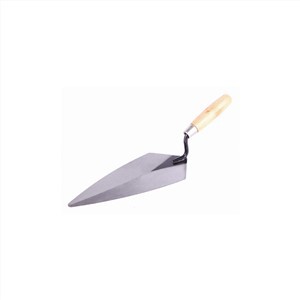
A trowel is a hand tool typically used in masonry, tiling, and plastering work. It consists of a metal blade attached to a long handle, facilitating the spreading and smoothing of substances such as mortar, grout, and plaster. Trowels come in various shapes and sizes, designed for specific applications such as laying bricks, applying thin layers of material, or detailing corners and joints. Essential for achieving a neat and professional finish, trowels are indispensable for tradespeople and DIY enthusiasts alike.
Advantages of Trowel
Precision and control
The trowel's compact design enables users to apply materials with pinpoint accuracy. Whether it's spreading grout between tiles, applying thin-set adhesive under tiles, or laying out a neat bed of mortar for brickwork, the trowel provides the control needed to achieve professional results.
Versatility
Available in different shapes, sizes, and materials, trowels can be tailored to specific tasks. For example, a pointed trowel is ideal for getting into tight spaces between tiles, while a square-end trowel is perfect for spreading large quantities of material quickly. This adaptability makes it a valuable tool in a wide array of applications.
Time efficiency
Using a trowel allows workers to complete tasks much faster than manual spreading methods. The tool's design facilitates swift and efficient material distribution, reducing the time it takes to complete a project and increasing productivity on the job site.
Material consistency
When applying materials such as grout, mortar, or adhesive, a trowel ensures an even and consistent application. This uniformity is crucial for the structural integrity and aesthetic appeal of the finished product, whether it's a wall of tiles or a brick patio.
Ergonomic design
Trowels are typically designed with ergonomics in mind, featuring comfortable handles that reduce hand fatigue during extended use. This thoughtful design aspect allows workers to maintain their grip and control over the tool without experiencing strain or discomfort.
Portability and accessibility
Due to their lightweight and compact nature, trowels can be easily transported to and from the job site, or between different locations within the site itself. This portability means workers can access hard-to-reach areas without lugging around cumbersome equipment.
-
![Bricklaying Trowel With Square Head For Mason]()
Bricklaying Trowel With Square Head For Mason
Add to Inquiry -
![10 Inch CUSPS BRICKLAYING TROWEL]()
10 Inch CUSPS BRICKLAYING TROWEL
Add to Inquiry -
![9 Cusps Bricklaying Trowel]() Add to Inquiry
Add to Inquiry -
![carbon steel finishing masonry trowel]()
carbon steel finishing masonry trowel
Add to Inquiry -
![Carbon Steel concrete finishing trowel]()
Carbon Steel concrete finishing trowel
Add to Inquiry




Why Choose Us
High quality
Our products are manufactured or executed to a very high standard, using the finest materials and manufacturing processes.
Long warranty
We are confident in the quality of our products and are willing to provide you with long-term technical service support.
Quality control
We have built a professional quality control team to accurately inspect every raw material and every production process.
Customized services
We understand that each customer has unique manufacturing needs. That’s why we offer customization options to cater to your specific requirements.
Competitive price
We offering a higher-quality product or service at an equivalent price. As a result we have a growing and loyal customer base.
24H online service
We try and respond to all concerns within 24 hours and our teams are always at your disposal in case of any emergencies.
Masonry trowel
This type of trowel is typically used by bricklayers and masons for laying bricks, blocks, and stones. It has a flat, narrow blade for holding and spreading mortar and a pointed end for getting into tight spaces. The blade is usually made of high-carbon steel for durability.
Plastering trowel
Plastering trowels have a wider, deeper blade than masonry trowels, which is ideal for scooping up and applying large amounts of plaster. They often have a slightly curved blade to facilitate smooth application.
Pointing trowel (concrete trowel)
This type of trowel is used for finishing concrete surfaces, such as driveways and sidewalks. It has a flat, wide blade with a pointed end for edging and detailing.
Flooring trowel
Flooring trowels are specifically designed for installing flooring materials, such as vinyl or linoleum. They have a flat, wide blade with a slight curve at the edges to help spread the adhesive evenly across the floor.
Grouting trowel
Grouting trowels are used to apply grout to tile installations. They have a flat, narrow blade with a pointed end for getting into tight spaces between tiles.
Stucco trowel
Stucco trowels are designed for applying stucco to walls and ceilings. They have a wide, flat blade with a slight curve at the edges to help spread the stucco evenly.
Drywall trowel
Drywall trowels are used for taping and finishing drywall joints. They have a flat, wide blade with a pointed end for getting into tight spaces.
Edger trowel
Edger trowels are used to create clean, straight edges on concrete or masonry surfaces. They have a narrow, pointed blade that can be used to scrape away excess material along the edge of the surface.
Notching trowel
Notching trowels are designed for installing baseboards and other trim pieces. They have a flat, wide blade with notches along one or more edges to allow for the expansion of materials as they settle.
Clean the trowel after use
Before storing your trowel, make sure to clean it thoroughly. Remove any dried-on mortar, grout, or other materials from the blade and handle. Wipe it down with a damp cloth and dry it completely to prevent rust or corrosion.
Oil the blade
Apply a thin layer of oil to the blade of the trowel to protect it from moisture and prevent rust. Be sure to wipe off any excess oil so it doesn't attract dirt or grime.
Protect the handle
If your trowel has a wooden handle, consider applying a protective coating such as linseed oil or danish oil to protect it from drying out and cracking. For plastic or rubber handles, simply wipe them down with a damp cloth.
Store in a dry place
Store your trowel in a dry place away from moisture and humidity. Excess moisture can cause rust and corrosion on the metal parts of the trowel, while humidity can cause the wooden handle to swell and crack. A dry storage area will help keep your trowel in good condition.
Organize your tools
Use a tool rack or organizer to keep your trowel and other tools neatly arranged in your workspace or garage. This will help you find what you need quickly and easily, and it will also help protect your tools from damage or loss.
Avoid placing other objects on top of the trowel
When storing your trowel, be sure not to place any heavy objects on top of it. This can cause the trowel to become bent or damaged, which can affect its performance and lifespan. Instead, store it vertically in a tool rack or horizontally on a shelf or workbench.
Regularly inspect your tools
Regularly inspect your trowel and other tools for signs of wear and tear, such as nicks in the blade, cracks in the handle, or loose screws. Address any issues promptly to prevent further damage and ensure that your tools remain safe and effective to use.

In masonry, trowels are used to apply mortar to the edges of bricks or blocks before laying them. The sharp edge of the trowel helps in scraping off excess mortar, ensuring a neat and sturdy structure. Additionally, masons use a special type of trowel called a pointing trowel to fill in gaps between existing bricks, thereby improving the overall appearance and weather resistance of the wall. For tiling projects, the trowel plays a pivotal role in the preparation of the substrate. A notched trowel is used to spread adhesive or thinset evenly over the surface, creating a textured base that secures the tiles in place. The depth and spacing of the notches are tailored to match the size and thickness of the tiles being installed. After spreading the adhesive, the trowel is also used to remove any excess, preventing unwanted buildup beneath the tiles. In plastering, a plasterer’s trowel is employed to apply and smooth plaster onto walls and ceilings. The wide blade of the trowel allows for efficient transfer of plaster, while its flexible edge conforms to the contours of the surface, facilitating a smooth and even finish. The trowel also comes into play during the final stages of plastering when the excess plaster is removed from the surface, leaving a polished look. Stuccowork involves the application of stucco, a cementitious coating, to exterior walls. Trowels with a square or U-shaped notch are ideal for this task as they provide a good balance between material retention and spreadability. The stucco is worked into the notches of the trowel and then smoothed onto the wall, creating a textured finish that is both durable and aesthetically pleasing. Drywall finishing requires the use of taping knives, which are a type of trowel specifically designed for this application. These knives are used to apply joint compound to seams and corners, creating a smooth transition between sheets of drywall. The taping knife is then utilized to feather the edges of the joint compound, blending it seamlessly with the surrounding drywall surface. Lastly, in flooring installation, a flooring trowel is used to spread adhesives evenly over the subfloor. The notches on the trowel help create a rough texture that improves the bond between the adhesive and the flooring material. This step is crucial in ensuring that the flooring remains securely in place over time.
Precautions When Using Trowel
Handle with care
Treat the trowel with respect, as the sharp edge can cause injury if mishandled. Avoid running your hands along the blade or pointing it at others. When not in use, keep the trowel blade down and out of the way to prevent accidents.
Use the right trowel for the job
Select the appropriate trowel for the task at hand. Using the wrong type of trowel can result in inefficient work and increased risk of injury. For instance, a pointing trowel is best suited for filling joints between masonry units, while a margin trowel is designed for larger-scale spreading tasks.
Maintain good grip and balance
Hold the trowel securely with a firm grip to maintain balance and control. This is especially important when handling heavier loads of materials. Keep your wrist straight and avoid twisting motions that could lead to strain or injury.
Store materials properly
Ensure that the materials you are working with are stable and secure. Unstable stacks of bricks or tiles can collapse unexpectedly, potentially causing injury or damage to your project.
Work in a safe environment
Keep your work area clean and organized to reduce the risk of slips, trips, and falls. Store hazardous materials securely and out of reach of children and unauthorized individuals.
Be mindful of surroundings
Pay attention to your surroundings at all times, especially when working in close proximity to others. Communicate clearly with your team members to avoid accidents and misunderstandings.
Firstly, consider the material you will be working with. Different materials require different types of trowels. For instance, a masonry trowel is designed for handling mortar and will not be suitable for spreading thinset or adhesive for tile work. Similarly, a flooring trowel with its notched blade is specifically designed to spread adhesives for vinyl, linoleum, or hardwood flooring installations. The size of the trowel is another crucial factor to consider. A larger blade can cover more area quickly, but it may be less maneuverable in tight spaces. Conversely, a smaller trowel offers greater precision but requires more time to complete the task. Therefore, assess the scale of your project and the amount of space you have to work with to determine the appropriate size. The blade shape and texture are also important. The shape of the blade will affect both how much material you can hold and how smoothly you can apply it. For example, a V-notched trowel is perfect for creating a ridged surface for better bonding of tiles, while a U-notched trowel provides a smoother finish. The texture of the blade should be appropriate for the material you are working with; some blades are serrated to better grip the material, while others are smooth for a cleaner application. The handle of the trowel is also worth considering. A comfortable and ergonomically designed handle can reduce fatigue and increase productivity. Look for a handle that fits comfortably in your hand and provides a good grip to prevent slippage. Some handles are made of wood, while others are made of metal or plastic with rubberized grips for extra comfort. Consider the quality of the trowel. A well-made trowel will last longer and provide better performance. Invest in a reputable brand that offers a warranty or guarantee. Check the materials used in construction, such as high-carbon steel for the blade, which is known for its durability and strength.

Forging
Forging is one of the oldest and most traditional methods of producing trowels. It involves shaping a metal blank, typically made of high-carbon steel, through the application of force. The blank is heated to a high temperature until it becomes malleable, then hammered into shape using a series of dies and punches. Forged trowels are known for their strength and durability, making them ideal for heavy-duty applications.
Casting
Casting is another common method used in trowel production. It involves pouring molten metal into a mold cavity, where it cools and solidifies into the desired shape. Unlike forging, casting does not require heating the metal to such high temperatures, making it a more cost-effective and energy-efficient process. Cast trowels can be manufactured in large quantities and are often used for less demanding applications.
Machining
Machining is a precise method that involves cutting metal to shape using various tools such as lathes, mills, and grinders. This method allows for tight tolerances and fine adjustments to the trowel's dimensions and blade shape. Machined trowels are typically used in applications where precision and accuracy are paramount.
Powder metallurgy
Powder metallurgy is a unique production method that involves pressing metal powders into a desired shape under high pressure and temperature, followed by sintering to bond the particles together. This method allows for the creation of complex shapes and internal features that are difficult to achieve with other methods. Powder metallurgy trowels offer good strength-to-weight ratios and can be customized to meet specific design requirements.
Bending and forming
Bending and forming are processes used to shape the trowel's handle and other components. These methods involve bending or deforming metal sheets or bars into the required shapes using mechanical or manual force. The handle is an essential part of the trowel, providing comfort and control during use. High-quality handles are typically made of materials that offer good grip and resistance to fatigue and impact.
Heat treatment
Heat treatment is a critical step in the production of trowels, as it enhances the metal's properties such as hardness, toughness, and wear resistance. Common heat treatments include annealing, quenching, and tempering. Annealing involves heating the metal to reduce hardness and make it easier to work with; quenching rapidly cools the metal to increase hardness; and tempering relieves internal stresses and improves toughness.
What Are the Components of Trowel
Blade
The most prominent part of a trowel is its blade, which can be flat, notched, or pointed, depending on the intended use. The material of the blade is typically metal, often made from high-carbon steel for durability and strength. The shape and size of the blade dictate the tool's capacity and versatility. For example, a flat blade is ideal for spreading materials evenly, while a notched blade is perfect for creating ridges in adhesive to improve tile adhesion.
Handle
The handle is the part of the trowel that the user holds. It can be made from various materials, including wood, metal, or composites, and may feature a grip to enhance comfort and reduce fatigue during use. The length and shape of the handle can affect the control and leverage a user has over the blade, making it crucial for choosing a handle that feels comfortable and balanced in the hand.
Ferrule
Sometimes referred to as a spacer, the ferrule is a small metal piece that sits between the blade and the handle. Its primary function is to keep the handle at the correct distance from the blade, which is essential for maintaining consistent pressure and control when using the trowel.
Tang
The tang is the part of the handle that extends into the ferrule and is connected to the blade. It provides structural support, ensuring that the trowel does not break or bend when force is applied. A well-designed tang enhances the trowel's durability and longevity.
Tip
On some specialized trowels, there is a tip or point at the end of the blade, which is useful for getting into tight spaces or for detailed work such as pointing or finishing mortar joints.
Notches
Trowels used for tiling often have notches of varying depths and widths across the blade's trailing edge. These notches are designed to hold just the right amount of adhesive or thinset and to spread it evenly across the substrate, creating a textured surface that helps the tiles adhere firmly.
Serrations
Some trowel blades feature serrations, which are small saw-like teeth along the edge of the blade. These serrations provide additional grip on the material being spread, preventing it from slipping and ensuring a more controlled application.
Width and length
The width and length of a trowel blade determine its coverage area and the amount of material it can hold. A wider blade covers more surface area quickly but may be less precise, while a narrower blade offers greater control and precision but requires more time to cover the same area.
Weight
The weight of the trowel affects its performance and ease of use. Heavier trowels can apply more force when necessary but may cause user fatigue over time. Lighter trowels are easier to manipulate and control but may lack the necessary force for certain tasks.
How Do You Hold a Trowel Properly?
The grip you choose will depend on the type of work you’re doing. For general tasks like spreading mortar or concrete, you should use a firm, full grip that encompasses the handle near its end. This provides stability and allows you to apply even pressure across the blade. When working with a trowel for detailed tasks, such as pointing or finishing, you may need to adjust your grip slightly to allow for greater dexterity and control. Your thumb and index finger should form a "V" shape around the handle, with the tip of your index finger touching the heel of your thumb. This creates a pivot point that allows you to easily rotate the trowel for different motions, such as scraping or smoothing. Your middle and ring fingers should wrap around the handle behind the index finger, providing additional support. The little finger should be curled around the handle for a comfortable, secure grip. Place your hand near the end of the handle for tasks requiring a broad, sweeping motion. If you need more control for detailed work, move your hand closer to the ferrule or tang. Adjust the position of your hand based on the size of the trowel and the task at hand to maintain balance and control. Keep your wrist straight but not stiff. Allow it to bend slightly to facilitate smooth, natural movements. Avoid overworking your wrists by keeping them in a neutral position. Position your elbow directly below your hand for maximum leverage and control. This alignment helps prevent strain on your arm and reduces the risk of injury. Keep your shoulders relaxed and aligned with your hips. Avoid leaning too far forward or backward, as this can cause strain on your back and neck. Keep your body close to the work surface to maintain balance and reduce the strain on your muscles. Hold the trowel at the correct angle relative to the work surface for the task at hand. For spreading, the blade should be nearly parallel to the surface. For scraping or cutting, tilt the blade slightly downward. Like any skill, holding a trowel correctly takes practice. Pay attention to how your body responds to different grips and postures, and adjust as needed. Over time, you will develop a natural feel for the tool and find what works best for you.
Can a Trowel Be Sharpened?
Yes, a trowel can be sharpened. In fact, maintaining the sharpness of a trowel is important for optimal performance and efficiency in various construction tasks. Sharpening a trowel involves restoring its edge to a keen state, allowing for smoother and cleaner application of materials such as mortar, stucco, or adhesives. Before sharpening, inspect your trowel for any major damage or wear that could affect its performance. Look for chips, cracks, or bends in the blade, and check the handle for stability and integrity. Clean off any dirt, debris, or dried materials from the blade and handle using soap and water or a suitable solvent. Ensure the blade is dry before proceeding to sharpen it. Choose the appropriate sharpening tool for your trowel based on its material and condition. You can use a whetstone, file, or even a specialized trowel sharpening kit. For stainless steel trowels, a diamond hone or ceramic stone might be more effective. Determine the appropriate angle for sharpening your trowel, which is usually around 20 to 30 degrees for most trowel blades. Maintaining a consistent angle will ensure an even and precise edge. Begin sharpening by holding the sharpening tool at the desired angle and drawing the blade across it, similar to how you would sharpen a kitchen knife. Apply light to moderate pressure and maintain a consistent speed. Repeat this process on the opposite side of the blade to maintain symmetry. Continue sharpening the blade until you feel a burr forming on the edge, which indicates material has been removed and the edge is taking shape. Flip the trowel over and repeat the sharpening process on the other side until the burr is removed. After sharpening both sides, refine the edge by lightly touching up the blade with the sharpening tool. This step removes any rough spots and ensures a smooth, sharp edge.
Our Factory
Chongqing Homar Technology Co., Ltd. is a professional manufacturer specializing in design, manufacturing and distribution of Hand tools& Hardware, including pliers, hammers, wrenches, screwdrivers, drills, measuring tools, garden tools, construction tools, safety tools, as well as all kind of tool kits and other related hardware products.


Our Certificates

FAQ
Q: What is a trowel?
Q: What are the different types of trowels?
Q: How do you hold a trowel properly?
Q: Are there any safety tips when using a trowel?
Q: Can a trowel be sharpened?
Q: What materials can be applied with a trowel?
Q: What is the difference between a trowel and a shovel?
Q: Is there a weight limit for trowels?
Q: What is a float trowel used for?
Q: How do I choose the right trowel size?
Q: Can trowels be customized?
Q: How long does a trowel typically last?
Q: Can a trowel be used for diy projects?
Q: What is a notch trowel used for?
Q: What is the best material for a trowel blade?
Q: Can I use a trowel for applying filler?
Q: What is the best way to use a trowel for laying tile?
Q: Can a trowel be used to mix paint?
Q: Can a trowel be used in concrete countertop making?
Q: What is a plasterer's trowel used for?
We're professional trowel manufacturers and suppliers in China, specialized in providing hand tools and hardware. We warmly welcome you to buy high quality trowel in stock here from our factory. Contact us for more details.
Construction Tools