

Why Choose Us
Complete Supply Chain
Has accumulated a rich and perfect supply chain of hardware products, with professional management and excellent marketing personnel, professional after-sales service, insisting on the most perfect quality, the most favorable price, the most perfect service, the fastest speed to supply your products.
Certificate
All our products are produced under strict quality control. All our manufacturing plants are ISO9001:2008 certified, and most of our products meet EN standard,ANSI standard and Australian standard.All related certificates and test reports are available.
Global market
Our products have been exported to more than 80 countries and regions throughout the world in Europe, America, Mid-east area, Australia, Southeast Asia and Africa, etc. We have won a good reputation among our customers by providing high quality, safe and reliable products as well as fast and efficient service.
After-sales Service
The company has a special after-sales service telephone and after-sales service mailbox, professional online service and record after-sales work, and timely feedback, to solve your after-sales needs.
A Ball Peen Hammer, also known as a Ball-Peen Hammer or Ball-Peen (British English), is a specialized type of hammer that is distinguished by having one flat face and one hemispherical face. The term "peen" refers to the round face, which is used for shaping and forming metal. This tool is primarily used in metalworking, particularly in tasks that require precision and control over the material being worked on.
-
![Ball Peen Hammer With Wooden Handle]()
Ball Peen Hammer With Wooden Handle
Add to Inquiry -
![24oz Ball Pein Hammer]() Add to Inquiry
-
![Machinist Ball Peen Hammer]() Add to Inquiry
-
![Hammer With Round Head]() Add to Inquiry
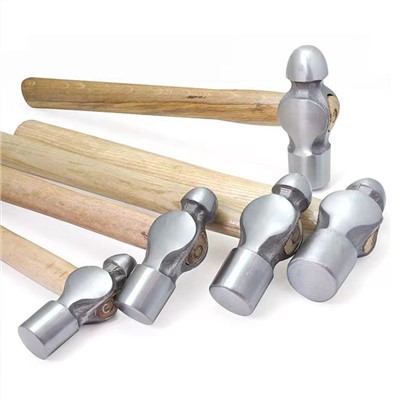


Shaping and Forming Metal
Ball peen hammers are widely preferred for shaping and forming metal in metalworking and blacksmithing. With their precisely rounded peen side, they offer unparalleled control and accuracy in striking, enabling craftsmen to flawlessly create curves, contours, and on the surface of metals.
Riveting
A ball peen hammer is a handy tool for riveting, primarily when used alongside a rivet and an anvil. With the help of the rounded peen end, it can effortlessly secure the rivet head in place, creating a permanent connection between two pieces of metal.
Cold Chiseling
Ball peen hammers can be used for cold chiseling tasks, such as cutting or shaping metal, stone, or other materials. The hammer’s flat face is combined with a chisel to remove material or create specific shapes.
Texturing and Marking
If you want to add some texture or decorative marks to metal surfaces, you can use the rounded peen side of a hammer. This will give your metal surfaces a unique and pleasing appearance.
General Striking and Pounding
A ball peen hammer is an incredibly versatile tool that can be trusted to easily handle a wide range of general striking and pounding tasks. Whether working with wood, metal, or construction materials, this tool is perfect for driving nails, adjusting metal components, or performing light-duty tasks confidently.
Adjusting and Aligning
The rounded peen side can adjust and align components, especially in mechanical and automotive applications. It allows for controlled and precise blows, making it suitable for straightening bent parts.
Tightening Fasteners
When tightening fasteners, bolts, or rivets, a ball peen hammer can be a reliable option, especially when other tools are not readily available.

The ball peen hammer was made for use in striking and shaping metal materials. It is the tool that is utilized to form the general shape of the material in metal fabrication. It is also used for hitting chisels and punches. In the past the peening hammer was used for the manufacture of swords and knife blades. After the metal has been formed in a cast into the desired sword or knife shape, it is filed roughly and then molded into its proper shape by means of a ball peen hammer.
More Conventional Uses of the Ball Peen Hammer
The original function of the ball peen hammer in conventional usage was to peen metals that are welded or riveted to each other so that the joints will become as flexible as the surrounding metal. However, more people are now using this kind of hammer for shaping and expanding the free end of light rivets, copper roves and set rivets. It has also become common for the ball peen hammer to be used for shaping, flattening or removing dents in various metals, because of the additional hardness and heft that you can find in the tool.
Why Ball the Peen Hammer Is Best for Riveting Jobs
If you want to set rivets in metal by hand, your best choice of tool for the job should be the ball peen hammer. Riveting entails the use of a soft metal nail that is driven through a hole drilled in metal sheets or boards. Rivets are the usual means of joining 2 metal sheets together aside from welding, and you can make a great permanent joint if you will be able to do the task right. The process will require cutting the unused material on one side and then peening the shaft of the nail that is jutting out on the opposite side. Striking it with a ball peen hammer will form a mushroom shape at the end of the nail, effectively fastening the 2 metal sheets together.
A ball peen hammer is more effective in riveting because the greatest risk in peening a rivet is when you heat the shaft of the nail dead on. This will bend the soft metal nail inside the hole effectively crippling the rivet. If a load or stress is placed on the metal sheets after your task is finished, the extra weight will straighten the bent rivet thereby separating the joint. This will severely weaken the structure of your project.
Create a Plan
The first step in performing any task safely is to develop a strategy. Before you swing your hammer, you should consider where you're swinging, what you're trying to do, and how hard you need to swing. Using a hammer without a good plan could result in significant injury to yourself and others.
Examine Your ball pein hammer
Ensure the handle is robust and securely fastened to the hammer's head. You want to avoid injuries or damage that could result from the head flying off the handle and hitting someone or something. Do not use the ball pein hammer if it is really old and rusted. The handle's wood may be decaying, or the steelhead may be corroded. In such situations, the hammer may shatter or the head may fly off again. Try tightening the head of a hammer with a screwdriver. If that doesn't work, you should try another hammer.
Use Goggles
While using a ball pein hammer is straightforward, there are always risks involved. It is possible to swing the hammer too far back and strike yourself in the eye with the claw. Or, debris from the hammer or the item you are utilizing could strike you in the face or eye. Make certain to wear safety eyewear and fasten them securely.
Use Gloves
Gloves are necessary to safeguard your hands when handling objects that demand a firm grip. Not only do gloves shield your hands from calluses and other minor injuries, but gloves with grips can also prevent you from losing control of your hammer.
Consider Before Swinging
Before hitting your hammer, look to the left, the right, and behind you. This will keep you from harming others or yourself. It can also prevent the hammer from becoming snagged on nearby objects. Especially if you are working in a shared place, it is essential to be aware of your surroundings.
Obtain a Secure Grip
The majority of hammers feature a rubber grip at the base of the handle. If not, the bottom of the handle should be widened so that it may be supported by the hand. Position your thumb as far up the handle as possible to manage the force of your swing.
Maintain Precision
It is extremely usual to strike your fingers with a hammer. Ensure that you have a practice swing and that the head of the hammer is aligned with the object before you swing. This will prevent thumb bruising and painful cries. Build up the swing's momentum. Swing gradually, beginning lightly and increasing force as the nail is driven deeper. Once the nail is securely in place, withdraw your hand so the toxoid causes avoidable damage. Inappropriate hammering can also be harmful. Swing with your entire arm, and avoid placing excessive strain on your shoulder or wrist.
Always Have a First Aid Kit Available
No matter how many precautions you take when handling equipment or performing tasks, accidents might still occur. As long as you have packed a first aid box with the required goods to treat any injuries that may occur, that is OK. There are two methods to acquire a first aid kit: purchasing one that is already assembled or assembling one yourself. If you prefer to construct your first aid kit, the American Red Cross has compiled a comprehensive list of goods you should include. In addition to keeping the necessary supplies in your kit, you should always have a first aid kit available in your house, workplace, or vehicle. We recommend purchasing multiple kits and placing them wherever you might need to deliver first aid.
Keeping your Ball Peen Hammer Clean
I bought a couple of antique ball peen hammers that needed to be cleaned up. I want to work with metal with some of my ball peen hammers, so they're receiving this treatment. This hammer is in good condition. The handle is straight, snug, and free of cracks. As a result, I will not be detaching the head from the handle. Cleaning the head would be easier without the handle, but it is still possible. I'll be cleaning up with an unbranded 8oz head hammer.
A smooth face is useful when working with sheet metal or thin plates with a hammer. With each strike, a rough face will texture the surface, leaving you with an issue to cope with later. You may wish to round the surface depending on what you intend to accomplish with the hammer. When pounding metal, a rounded face is advantageous because it distributes pressure over a smaller area and helps you to strike blows without leaving a sharp edge on the metal. The radius of the face is determined by how the hammer is used. If you're pounding into a depression, the radius of the face should be less than the radius of the depression. I made a cardboard template for my desired radius and then went to my small belt sander. I began by removing metal in circles with a 100-grit belt from the outside. I checked my progress with the template and ground as needed after each pass.
Certifications

Our Factory
Our products have been exported to more than 80 countries and regions throughout the world in Europe, America, Mid-east area, Australia, Southeast Asia and Africa, etc. We have won a good reputation among our customers by providing high quality, safe and reliable products as well as fast and efficient service. All our products are produced under strict quality control. All our manufacturing plants are ISO 9001:2008 certified, and most of our products meet EN standard, ANSI standard and Australian standard. All related certificates and test reports are available.


FAQ
We're professional ball peen hammer manufacturers and suppliers in China, specialized in providing hand tools and hardware. We warmly welcome you to buy high quality ball peen hammer in stock here from our factory. Contact us for more details.
Carbon Steel Adjustable Wrench With Chromium Plating, Claw Hammer With Tpr Handles, Carbon Steel End Cutter Pliers