

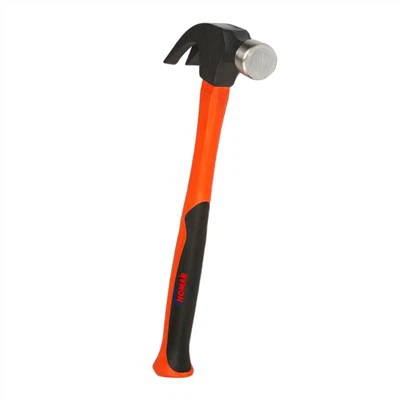
A claw hammer is a basic hand tool commonly used in carpentry and construction. It consists of a head with a flat, wedge-shaped striking surface on one side and a curved claw on the opposite end. The striking surface is used to drive nails into wood or other materials, while the claw is used to extract nails or pry apart objects. The claw hammer's design allows for efficient driving and removal of nails, making it an essential tool for a wide range of tasks.
Advantages of Claw Hammer
Versatility
The claw hammer is one of the most versatile tools in any toolbox. It can be used for a wide range of tasks, including driving nails, pulling out old nails, prying open objects, breaking apart materials, and even shaping wood. This versatility makes it an indispensable tool for a wide range of projects, from simple household repairs to complex construction work.
Strength and durability
Claw hammers are typically made from high-quality materials such as steel or forged carbon, which gives them exceptional strength and durability. This means that they can withstand repeated use and abuse, making them a reliable tool for even the most demanding tasks.
Ergonomic design
The design of a claw hammer takes into account the user's comfort and ergonomics. The handle is usually made from a non-slip material such as rubber or plastic, which provides a secure grip and reduces fatigue during extended use. Additionally, the curved shape of the handle fits comfortably in the hand, allowing for easy control and maneuverability.
Precision
The claw hammer's design allows for precise strikes, whether driving nails or performing delicate tasks. The face of the hammer is typically flat and smooth, which provides a consistent striking surface. Additionally, the curved claw provides leverage for pulling out nails without damaging the surrounding material.
Easy to use
Claw hammers are easy to use, even for those with limited experience. With a little practice, anyone can learn to drive nails quickly and efficiently. Additionally, the claw hammer's design allows for easy removal of nails, making it a convenient tool for repair work.
Portability
Claw hammers are lightweight and compact, making them easy to carry and transport. This portability makes them ideal for use in a variety of settings, from indoor construction projects to outdoor landscaping work.
-
![One Piece Claw Hammer]() Add to Inquiry
-
![16 Oz One-piece Claw Hammer]() Add to Inquiry
-
![Hammer With Magnetic Nail Holder]()
Hammer With Magnetic Nail Holder
Add to Inquiry -
![Magnetic claw Hammer For Cap Nails]()
Magnetic claw Hammer For Cap Nails
Add to Inquiry -
![16 Oz Hammer Wood Handle]() Add to Inquiry
-
![16 Oz Fiberglass Claw Hammer]() Add to Inquiry
-
![20 Oz Claw Hammer]() Add to Inquiry
-
![Black Edition Claw Hammer]() Add to Inquiry
-
![Claw Hammer With Nail Holder]() Add to Inquiry
-
![16oz rip claw hammer]() Add to Inquiry
-
![Long Handle Claw Hammer]() Add to Inquiry
-
![25 Oz Straight Claw Hammer]() Add to Inquiry




Why Choose Us
High quality
Our products are manufactured or executed to a very high standard, using the finest materials and manufacturing processes.
Long warranty
We are confident in the quality of our products and are willing to provide you with long-term technical service support.
Quality control
We have built a professional quality control team to accurately inspect every raw material and every production process.
Customized services
We understand that each customer has unique manufacturing needs. That’s why we offer customization options to cater to your specific requirements.
Competitive price
We offering a higher-quality product or service at an equivalent price. As a result we have a growing and loyal customer base.
24H online service
We try and respond to all concerns within 24 hours and our teams are always at your disposal in case of any emergencies.
Curved claw hammer
The most standard type of claw hammer features a curved claw. The curve allows for better leverage when pulling out nails, making it easier to remove them without damaging the surrounding wood. This type of hammer is versatile and suitable for a wide range of general tasks.
Rip claw hammer
Also known as a ripping hammer, this type has a straight claw rather than a curved one. The straight claw is designed for splitting or prying apart boards or other materials. It's often used by carpenters who need to separate joined pieces of wood.
Ball peen hammer
This hammer features a rounded, peened head instead of a flat face. It's primarily used for shaping metal and applying finishes to surfaces. The ball peen side is used to deliver a glancing blow, which helps shape the metal without leaving marks. The flat face is used for striking.
Rubber mallet
While not technically a claw hammer, a rubber mallet is often included in the category due to its similar shape and function. It has a rubber head that delivers softer blows, making it ideal for tasks that require precision without causing damage to the workpiece. It's commonly used in woodworking and furniture making.
Finishing hammer
A finishing hammer has a smaller, lighter head and a shorter handle than other types of hammers. It's designed for fine carpentry work, such as installing moldings or trim. The smaller head minimizes damage to the finished surface, while the shorter handle provides better control.
Drywall hammer
This specialized hammer is designed specifically for drywall installation. It has a flat, wide face on one side and a claw on the other. The flat face is used for driving nails, while the claw is used for scoring and removing drywall. Some drywall hammers also have a textured handle for better grip.
Tack hammer
A tack hammer is a small, lightweight hammer with a pointed face. It's designed for driving tacks and small nails into soft materials such as corkboard or upholstery. The pointed face allows for precise placement of tacks, while the small size makes it easy to handle.

How to Store Claw Hammer
Choose the right location
Select a storage location that is dry, cool, and free from extreme temperature fluctuations. Humidity and heat can damage the hammer's handle, causing it to warp or crack. Avoid storing your hammer near corrosive substances that might rust the metal head.
Use a hammer rack
Invest in a hammer rack or holder that keeps hammers upright and organized. This prevents the hammer heads from coming into contact with each other, which can result in dents or scratches. Racks can be wall-mounted or freestanding, depending on your available space and preference.
Store horizontally
If a hammer rack isn't available, store the hammer horizontally with the claw facing downwards. This minimizes the risk of the hammer head damaging other tools or surfaces. Make sure the hammer is placed on a stable, non-slip surface to prevent rolling or falling.
Keep away from children
Store the hammer out of reach of children to prevent accidental injuries. Even when stored, hammers can be dangerous if handled improperly by someone untrained.
Clean before storage
After each use, clean the hammer head and handle to remove any debris, dirt, or rust. A light coating of mineral oil or a specialized wood conditioner can be applied to the handle to protect it from drying out and cracking.
Protective covering
Consider using a protective cover or sheath for the hammer head. This can prevent the metal from getting scratched or dented when not in use, especially if the hammer is stored alongside other tools.
Regular maintenance
Periodically check the hammer for any signs of wear or damage. Replace the handle if it becomes loose, cracked, or split to ensure safe usage. Check the head for any significant bends or cracks, and sharpen the claw if needed to maintain its prying effectiveness.
Organize your workspace
If you have a dedicated workspace, keep your hammer within easy reach but out of the way of active work areas. This allows for quick access without cluttering your immediate workspace.
Use tool chests or boxes
For those with a mobile workshop or who need to transport tools frequently, consider using a tool chest or box with compartments specifically designed for storing hammers. This not only keeps the hammer protected but also helps prevent loss or misplacement.

The claw hammer is a versatile tool that has found its application in various fields ranging from construction, carpentry, to DIY home improvement projects. Its design, which features a flat, blunt end for hitting nails and a curved claw for removing them, makes it an indispensable tool in these areas. One of the primary applications of a claw hammer is in construction. Construction workers often use claw hammers to drive nails into wood, drywall, and other building materials. The flat end of the hammer provides a consistent striking surface, ensuring that nails are driven in straight and securely. Additionally, the claw end is used to remove old or damaged nails, making it easier to replace or modify building components. In carpentry, claw hammers are commonly used for framing, roofing, and other woodworking tasks. Carpenters use hammers to drive nails into wooden frames, joists, and rafters, as well as to shape and mold wood by striking it with the hammer's face. The curved claw of the hammer is also used to pry apart wooden boards or panels, making it easier to disassemble structures or make repairs. Apart from construction and carpentry, claw hammers are also widely used in DIY home improvement projects. Homeowners often use hammers to hang pictures, install shelves, or perform minor repairs around the house. The versatility of the claw hammer makes it an ideal tool for these types of projects, as it can be used for a wide range of tasks. Claw hammers are not only limited to woodworking; they can also be used on metal and plastic surfaces. However, caution must be exercised when using a hammer on these materials to avoid causing damage or injury.
Precautions When Using Claw Hammer
Inspect the hammer
Before using the hammer, inspect it for any damage or wear. A damaged hammer can break during use, leading to injury. Ensure the handle is firmly attached and the head is not loose or chipped.
Hold the hammer correctly
Grip the hammer firmly with both hands, with your dominant hand at the end of the handle and your other hand near the base. This provides better control and power.
Use the right technique
Swing the hammer with a smooth, controlled motion. Avoid swinging too hard, as this can cause the nail to bend or skip, or result in over-penetration. Strike the nail squarely to avoid bending or breaking it.
Keep others away
When using a hammer, make sure no one is standing close to where you are working. Flying nails and missed swings can cause injuries.
Be mindful of your surroundings
Pay attention to what is behind and around the area where you are working. Swinging a hammer can cause collateral damage to walls, windows, or other objects.
Do not use the claw as a pry bar
The claw of a hammer is designed for removing nails, not for prying. Using it as a pry bar can damage the hammer and may lead to injury.
Store the hammer safely
After use, store the hammer in a designated place, away from children’s reach. Hang it on a rack or store it in a toolbox to prevent accidents.
Do not overreach
When swinging the hammer, do not overreach. This can cause you to lose balance and may result in an accident. Always position yourself close enough to the work area to maintain control.
Do not use a damaged hammer
If the hammer shows signs of damage, such as a cracked handle or a loose head, stop using it immediately. Continuing to use a damaged hammer can be dangerous and may result in injury.
Dispose of nails properly
After removing nails, dispose of them properly to prevent tripping hazards. Use a nail apron or a container to collect discarded nails.
Size and weight
The size and weight of a claw hammer depend on the type of work you intend to do. Larger hammers with heavier heads are suitable for heavy-duty tasks like framing or roofing, while smaller, lighter hammers are ideal for precision work such as fine carpentry. It's essential to choose a hammer that feels comfortable in your hand and allows you to maintain control over your swings.
Handle material
Handles are typically made from wood, fiberglass, or metal. Wooden handles are traditional and provide a good balance, but they can splinter or break over time. Fiberglass handles are more durable and resistant to shock, but they may feel less comfortable in your hand. Metal handles are very durable but can be heavy and difficult to control.
Head type
Claw hammers come with different head types, such as straight claw and curved claw. Straight claws are better suited for demolition work, as they allow you to pull nails more efficiently. Curved claws are more common for general carpentry and provide better leverage for removing nails.
Face shape
The face of the hammer, where it makes contact with nails, can be either flat or rounded. Flat faces are better for driving nails flush with the surface, while rounded faces are less likely to cause dimpling or marring of the wood.
Hammer weight distribution
The balance of the hammer is crucial for comfort and control. A well-balanced hammer will have its center of gravity towards the head, allowing for easier swings and reducing fatigue.
Finish and durability
The finish of the hammer head can affect its durability and resistance to rust. Chrome plating is common for added corrosion resistance, while a polished or painted finish can improve aesthetics.
Grip
The grip of the hammer should be comfortable and provide a secure hold, even when wet or sweaty. Rubber or textured grips are popular for their non-slip properties and ergonomic design.
Production Methods of Claw Hammer
Material selection
The first step is selecting the appropriate materials for the hammer's components. The head is typically made from steel, usually forged carbon steel or drop-forged steel, which offers strength and durability. The handle can be made from various types of wood like hickory, ash, or fiberglass, chosen for its shock-absorbing qualities and resilience.
Forging the head
The steel for the head is heated to high temperatures in a furnace until it becomes malleable. It is then shaped by under a hammer or press to form the rough outline of the hammer head, including the striking face and the claw. Forging creates a dense, strong grain structure in the metal.
Heat treatment
After forging, the head undergoes heat treatment to enhance its hardness and toughness. This process typically involves heating the metal to a specific temperature, holding it there for a certain period, and then cooling it rapidly. Different heat treatment processes like quenching and tempering are used to achieve the desired properties.
Machining and finishing
Once the head has been heat-treated, it is machined to precise dimensions, and the striking face is smoothed and polished. Any excess material is removed to ensure that the head is balanced and has the correct weight distribution.
Handle preparation
The handle must be carefully selected and treated to prepare it for attachment to the head. Wooden handles are often sanded and coated with varnish or oil to protect against moisture and splitting. Fiberglass handles are molded into shape and may include a rubber or plastic grip for comfort.
Attaching the handle
The handle is attached to the head using a process called fullering or wedging. For wooden handles, a slot is cut into the end of the handle, and the head is driven onto it with force, spreading the wood fibers and creating a tight fit. Metal ferules may be used to secure the handle further and provide additional strength.
What Are the Components of Claw Hammer
Striking face
This is the flat surface at the front of the hammerhead that comes into contact with nails or other objects. It can be smooth or have a textured surface to prevent slipping. The material of the striking face is usually steel, which is hardened to resist wear and tear.
Claw
The claw extends from the back of the hammerhead and is used to remove nails from wood or other materials. It typically has a curved shape, which provides leverage for pulling out nails. Some claw hammers also have a straight or pointed claw for specialized tasks.
Hammer handle
The handle of a claw hammer is the part that you grip and swing. It provides leverage and controls the force of each blow. Handles are usually made from wood, fiberglass, or metal.
Wooden handles
Traditional wooden handles offer a good balance and are comfortable to hold. However, they can splinter or break over time. To prevent this, some wooden handles are treated with chemicals or coated with varnish.
Fiberglass handles
Fiberglass handles are strong, durable, and resistant to shock. They are also lighter than wooden handles, making them easier to handle for extended periods. However, they can feel less comfortable in your hand and may be more difficult to control.
Metal handles
Metal handles are very durable but can be heavy and difficult to control. They are less common than wooden and fiberglass handles.
Grip
The grip is the part of the handle that you hold onto. It can be made from various materials, including rubber, leather, or textured plastic. A good grip should provide a secure hold, even when wet or sweaty, and be comfortable to hold for extended periods.
Hammer poll
The poll is the end of the hammerhead opposite the claw. It is typically flat and can be used for striking chisels or other tools. Some hammers also have a magnetic nail holder attached to the poll for convenience.
Yes, a claw hammer can be utilized for various tasks beyond its primary functions of driving and removing nails. Its versatility stems from the design of the tool, which includes a flat striking face for impact and a claw for pulling out nails. This combination makes it suitable for a wide range of applications in carpentry, construction, and even everyday DIY projects. One such application is breaking apart materials. The claw hammer can be used to dismantle structures or objects made of wood, such as pallets or crates. By inserting the claw under a joint or seam and applying leverage, the user can pry the material apart, making it easier to separate the individual components for recycling or reuse. This technique can also be applied to metal objects, although caution should be exercised to avoid sparks and potential damage to the tool. Another useful application of a claw hammer is as a makeshift chisel. When a chisel is not available, the flat side of the hammer's head can be used to chop or shape wood. By striking the edge of the hammer with another tool or object, the user can create a V-shaped groove or cutout in the wood. However, this method requires some skill and practice to achieve clean and precise results, as the flat surface of the hammer head is not as sharp or precise as a dedicated chisel. In addition to breaking apart materials and acting as a chisel, a claw hammer can also be used to flatten or level surfaces. By striking the protruding edges or high spots of a wooden surface with the flat side of the hammer's head, the user can smooth out irregularities and create a more uniform appearance. This technique can be particularly useful when preparing wood for painting or finishing. Moreover, a claw hammer can serve as a substitute for a mallet in certain situations. While not ideal for all types of work, a claw hammer can be used to deliver light to moderate impacts on softer materials such as softwood or plastic. The advantage of using a claw hammer over a mallet is that it allows for greater control and precision, as the user can apply varying amounts of force depending on the needs of the task.
What Is the Proper Way to Swing a Claw Hammer?
Grip and stance
Begin with a firm grip on the hammer's handle. Place your dominant hand at the base of the handle, with your fingers wrapped securely around it. Your non-dominant hand should be placed approximately one-third of the way down the handle, providing additional leverage and control. Stand with your feet shoulder-width apart, one foot slightly ahead of the other, to maintain balance. Bend your knees slightly and keep your back straight.
Positioning
When preparing to swing, align the hammerhead with the nail. Ensure that the face of the hammer is perpendicular to the nail head. Position yourself so that the nail is directly in front of your body, allowing for a straightforward swing without having to reach or twist your upper body.
Swing technique
Initiate the swing by drawing the hammer back in a controlled motion. The movement should originate from your legs and hips, transferring energy up through your arms to the hammer. Your shoulders should remain relatively still during this backward motion. As you bring the hammer forward, accelerate smoothly, allowing your body weight to contribute to the force of the swing. Keep your eyes focused on the nail throughout the swing.
Contact
Make contact with the nail head squarely and firmly. The goal is to drive the nail straight into the wood without bending or misaligning it. Strike with the center of the hammer's face to maximize efficiency and reduce the risk of damage to either the nail or the surrounding material.
Follow-through
After striking the nail, continue the swing motion slightly past the point of impact. This follow-through ensures the nail is driven deeply into the wood and helps maintain control of the hammer. Do not stop the swing abruptly, as this can lead to inaccuracy and potentially dangerous recoil.
Pulling out nails
When using the claw to remove nails, position the curved part of the claw under the nail head. Press down on the handle to lever the nail out of the wood. Use a rocking motion to pry the nail back and forth, gradually increasing the angle until the nail is free. Keep your hands clear of the nail as it comes out to avoid injury.
Practice
Proper technique requires practice. Start by driving nails into soft wood, then progress to harder woods as your skill improves. Pay attention to your form and adjust your stance or grip as needed to find what feels most natural and effective for you.
Safety considerations
Always wear appropriate eye protection to shield against flying splinters or missed swings. Ensure that no one is standing close to you when you swing the hammer. Work within a clear space to avoid accidental strikes on other objects or people.
Our Factory
Chongqing Homar Technology Co., Ltd. is a professional manufacturer specializing in design, manufacturing and distribution of Hand tools& Hardware, including pliers, hammers, wrenches, screwdrivers, drills, measuring tools, garden tools, construction tools, safety tools, as well as all kind of tool kits and other related hardware products.


Our Certificates

FAQ
Q: What is a claw hammer?
Q: How do I choose the right size of a claw hammer?
Q: What is the difference between a curved claw and a straight claw hammer?
Q: How do I maintain my claw hammer?
Q: Can I use a claw hammer for other tasks besides driving and removing nails?
Q: Is it safe to use a claw hammer?
Q: How do I properly grip a claw hammer?
Q: What is the proper way to swing a claw hammer?
Q: How do I remove a stuck nail with a claw hammer?
Q: Why does my claw hammer leave marks on the wood?
Q: How do I sharpen a claw hammer's striking face?
Q: How do I store my claw hammer?
Q: Can I use a claw hammer on metal surfaces?
Q: How do I choose a good quality claw hammer?
Q: What are some alternative uses for a claw hammer?
Q: Can I use a claw hammer on concrete or brick?
Q: How do I remove rust from my claw hammer?
Q: How do I prevent my claw hammer from slipping when striking nails?
Q: What are some safety tips when using a claw hammer?
Q: How often should I replace my claw hammer?
We're professional claw hammer manufacturers and suppliers in China, specialized in providing hand tools and hardware. We warmly welcome you to buy high quality claw hammer in stock here from our factory. Contact us for more details.
Claw Hammer With Tpr Handles,