

Chongqing Homar Technology Co., Ltd. is a supplier specializing in the design, manufacture and distribution of hand tools and hardware products. The main products include various pliers, hammers, wrenches, garden tools, construction tools, and safety tools. Our products have been exported to more than 80 countries and regions around the world, which are produced under strict quality control, and with relevant certificates and test reports.
Rich Experienced
Our more than 80 partners have many years of experience in product manufacturing and marketing, and can promptly connect, follow up and provide feedback on any of your product needs. Here you can find wholesale hand tool kits in various sizes and specifications and get customization services.
High Productivity
Our factory covers an area of more than 200,000 square meters and contains 6 production lines. It can supply your products as quickly as possible and provide expedited logistics and transportation services.
Quality Assurance
Our factory production process has passed ISO 9001: 2008, IS09001: 2000, ISO14000 and other certifications. Our products basically comply with EN standards, ANSI and other standards.
Wide Product Range
Our product range is complete, including hammers (claw hammer, ball hammer, rubber hammer), pliers (wire cutters, needle nose pliers, wire strippers, pipe wrench), measuring tools (tape measure, tape measure, belt ruler, ruler), as well as other hardware tools.
-
![Cross Rim Hex Wrench Chrome Plated]()
Cross Rim Hex Wrench Chrome Plated
Add to Inquiry -
![T-type hexagon socket wrench]() Add to Inquiry
Add to Inquiry -
![9 Piece Ball Point Hex Key Extra Long]()
9 Piece Ball Point Hex Key Extra Long
Add to Inquiry -
![ball end allen key set]() Add to Inquiry
Add to Inquiry -
![European Style Bolt Cutters]() Add to Inquiry
Add to Inquiry -
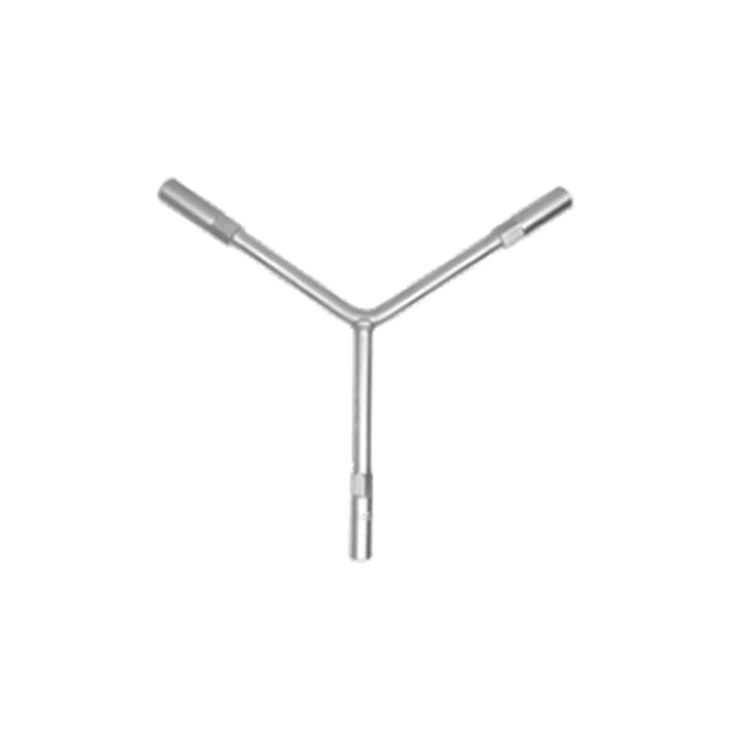
![Y-TYPE SOCKET WRENCH]() Add to Inquiry
Add to Inquiry -
![Adjustable Wrench with Dipped Handle]()
Adjustable Wrench with Dipped Handle
Add to Inquiry -
![Combination Tightening Spanner]()
Combination Tightening Spanner
Add to Inquiry -
![Diamond 10 Inch Adjustable Wrench]()
Diamond 10 Inch Adjustable Wrench
Add to Inquiry -
![Heavy duty 36 inch bolt cutters]()
Heavy duty 36 inch bolt cutters
Add to Inquiry -
![8 Inch Mini Bolt Cutter]() Add to Inquiry
Add to Inquiry -
![European Type Adjustable Wrench Heavy Duty]()
European Type Adjustable Wrench Heavy Duty
Add to Inquiry


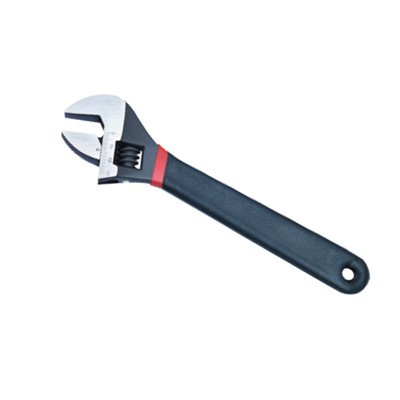


A wrench or spanner is a tool used to provide grip and mechanical advantage in applying torque to turn objects—usually rotary fasteners, such as nuts and bolts—or keep them from turning. Higher quality wrenches are typically made from chromium-vanadium alloy tool steels and are often drop-forged. The usage is that you slip the open jaw over the nut and hold it in place. Turn the screw mechanism so that it clamps tightly around the nut. Turn the wrench in a clockwise direction to tighten it, or counter-clockwise to loosen it.
Features of Wrenches
Efficient Work
Our wrench has multiple teeth on the end to increase the friction between it and parts like bolts, so even if you get deep into a compartment or appliance, it will still stick to the fastener until the turn is complete.
Durable Material
Made from high-quality steel and alloys, these wrenches are forged and heat-treated to increase hardness, while their chrome coating helps prevent corrosion.
Safe to Grip
They are designed for comfortable working, and their ergonomic handles provide a secure grip, minimizing hand fatigue so you can work longer.
Rich Sizes
Our wrenches are designed in a variety of standard sizes including 8mm - 19mm handle lengths to ensure you have the right tool to handle any screw or bolt for use in a variety of areas including automotive, bike repair, industry and workshops.
Main Types of Wrenches


Combination Wrench
Combination wrenches are a tool you may already be familiar with. This style features both an open-end and a box-end. The box end is ideal for hexagonal or square nuts. Combination wrenches are often utilized on fasteners that are difficult to loosen. The box end does a great job of loosening the fastener. The open end can then be used to fully unscrew it.
Open-end Wrench
A very common style of wrench is the open-end wrench. This option can be easily found in most mechanic or automobile shops you visit. This wrench has a u-shaped opening that varies in size. This opening fits the different SAE and metric nuts and bolts available. The open ends are often oriented at an angle of around 15 degrees to the handle. This greatly improves the range of motion for tighter spaces.
Box End Wrench
Box-end Wrenches, also referred to as ring spanners feature openings on each end that grip nuts and bolts. They have enclosed six, eight, or twelve-point openings. This wrench provides a tighter fit and allows for more torque to be applied without damaging the fastener. Since the entire open end is secured around the fastener, there is limited slipping.
Adjustable Wrench
The adjustable wrench is able to precisely grip many fasteners due to its adjustable broadhead jaw design. It features a knurled mechanism that makes it quick and simple to find the exact adjustment. This option is ideal for plumbing fixes and auto repairs. The most common adjustable wrenches have jaws displaced to a 15-degree angle relative to the handle.
Pipe Wrench
Pipe Wrenches, often called monkey wrenches are a style of wrench that are excellent for plumbers. They have serrated adjustable jaws that self-tighten for a secure grip to hold, tighten, or loosen threaded pipes and pipe fittings. Their long, sturdy handles allow for more leverage. The teeth on the pipe wrench will only grip when turning the wrench in one direction. This option is available in a large variety of sizes. They can be manufactured from six inches in length to over four feet.
Ratcheting Wrench
A ratchet wrench, also known as a socket wrench is perfect for turning nuts and bolts without lifting the wrench to reposition it. This tool is designed with a ratcheting function that allows them to engage and apply force in one direction, then disengage and turn freely in the opposite direction. A compatible socket locks into the ratchet. Using the appropriate sized socket will allow you to get the job done with ease. Extensions can be used with a ratchet wrench to reach even further into hard-to-reach spaces.
Crowfoot Wrench
Additionally, Crowfoot wrenches are excellent when the torque needed to tighten or loosen a fastener needs to be measured. They are also ideal when a regular socket wrench can't fit in the space. Crowfoot wrenches are a bit unique since they have no handle. They fit with a ratchet to extend their reach in difficult-to-reach areas. There are several types of crowfoot wrenches available including crowfoot flare nut wrenches, open-end crowfoots, adjustable crowfoots, and ratcheting crowfoots.
Striking Wrench
A striking wrench is also known as a hammer wrench or a slugging wrench. This tool loosens stubborn fasteners or sets/tightens nuts and bolts. It features a box end that is skillfully designed to stay on fasteners while being struck with a hammer.
Torque Wrench
Torque wrenches are rugged, durable, and easy-to-use tools that have excellent performance and longevity. They are used to apply a specific torque to a fastener such as a nut, bolt, or lag screw. Common torque wrenches include dial, click, beam, and digital torque wrenches.
Pedal Wrench
If you need to repair or maintain a bike, pedal cart, or pedal boat, a pedal wrench is the perfect fit. It is specifically designed for working on pedals. This wrench makes adjusting the connection of pedals to cranks a much easier process.
Factors to Consider When Choose Wrenches
Length
The length makes a huge difference in how much force can be applied to the fastener. A longer wrench has the ability to create greater torque i.e. turning force and; hence, is better for larger or stiffer nuts.
Profile of Spanner
The profile of a spanner affects the stability of the connection between the spanner and nut. Profile that makes more contact with the nut like ring spanners has less probability of slipping in comparison to the one that only contacts a few sides of nuts.
Thickness and Wideness of Its Head
The thicker and wider the head is, the stronger it will be. Thick heads and shafts provide more strength to the wrench and provide better contact with the nut, which means that the nuts will turn easily and the possibility of them getting damaged during the process decreases. On the other hand, wider heads don’t fit small spaces.
The Material of Spanner
The material of a spanner affects its quality. Spanners or wrenches made from titanium or steel with a high percentage of vanadium (approx. up to 1%) are of the best quality and can last for a lifetime. These are the few tips which can help you to select the correct spanner as per your requirement.
Quality
Using a high-quality torque will avoid inefficiencies and save money as it won’t get damaged easily. If you use a torque wrench of substandard quality, it will affect the quality of the project too. The wrench will get damaged easily and cost more in the long run.
Size
There are four different sizes of square head range, all of which correspond to different torque range and functions.
●The 1/4 in drive: Suitable for small nuts and bolts like on garden equipment, bicycles, and motorcycles. They produce between 4 to 21 ft-lb of torque.
●The 3/8 in drive: Suitable for a majority of automobiles such as passenger vehicles, light trucks, and cars. They produce 15 to 75 ft-lb of torque. It is the most versatile size and covers a wide range of functions.
●1/2 in drive: Covers larger nuts and bolts like in engine mounts and suspensions.
●3/4 in drive: Essential for special applications like in large cargo aircraft and tractor trailers.
Accuracy and Calibration
Wrenches have different accuracies. Choose a wrench with an accuracy of plus or minus 5%. Check the torque wrench calibration for the date and accuracy as per the manufacturer’s settings. When a torque wrench is well-calibrated, it will have clear scale visibility.
Process of Wrenches
Cutting
Long steel rods are cut to specific sizes, then often sand-blasted to remove any impurities that could affect the production process. The billet, at that point just a piece of metal, is then heated close to its melting temperature.
Drop Forge
Then it is drop forged, a process that takes the hot billet and shapes it into a rough forging. The rough forging gives you the shape you want, but not necessarily all the dimensions you need. When making wrenches, more than one size may be made from the same forging. The forging process is often only one step, but it sometimes requires more than one depending on the configuration of the wrench, and some manufacturers utilize a nitrogen atmosphere during parts of it to protect the purity of the steel from the surrounding oxygen, which could cause burns and slag.
Annealing
The forgings cool quickly on their own but are then moved on to the next step of annealing. Annealing is a form of heat treatment which alters the physical properties of the metal to soften it in preparation for the finishing steps.
Broaching
Next in line is broaching, a specific machining process which is the most common way of sizing the open and boxed ends of the wrenches. A broach is a metalworking tool that has a succession of teeth which increase in size in small increments, and pulled broaching is the most common process for wrenches, where the broach is pulled through until you get the size you want.
Heat Treating
Now it moves on to heat treating. All wrenches are heat treated to meet the hardness standards set forth by both American and international governing societies. Minimum and maximum hardness levels are very specific. A wrench cannot be too soft where it would potentially round off during use, and not too hard, causing it to be brittle. The heat-treating process, which is a critical and very scientific part of manufacturing, is often followed and combined with quenching and tempering.
Hardness Test
After the wrenches are heat treated, they are checked with a hardness tester to make sure they are within the required tolerance.
Polishing
After the hardness test and quality checks, it’s time for the polishing step. Polishing can be performed by a machine or done by hand, and it’s the first step affecting the final appearance of the wrench. Some companies also utilize a roto-finishing step. Roto-finishing, also known as vibratory finishing or tumbling, utilizes some form of media, commonly ceramic. The wrenches go in a container with water and chemicals, and they are then tumbled, which takes off any burrs, dirt or scale from heat treating, and you end up with an unplated product that looks very nice, smooth and shiny.
Plating
Now the wrench is ready for plating. The most common plating for wrenches is chrome (usually a nickel chrome), or a black oxide finish. Chrome plating is an electro plating that applies a current through the wrench, then deposits a nickel flash on the product first, and on top of the nickel flash, a layer of chrome.
A wrench is a common hand tool used to tighten or loosen nuts and bolts. Every wrench has two parts:
●The head, and
●The handle
The head of the wrench is used to grip nuts or bolts. The handle of the wrench is where you will hold the wrench when tightening or loosening fasteners. All wrenches will tightly grip the head of a fastener. Once the head of the wrench grips the fastener, you can rotate the wrench to tighten or loosen the nut.
Wrenches have long handles. The long handle gives you more leverage than other tools. More leverage makes it easier to tighten or loosen a fastener. You will use your dominant hand to hold the wrench. The handle of the wrench will run across your palm and in between your thumb and pointer finger. Your fingers should close around the handle. Recall that a longer handle gives you more leverage. Hold the wrench near the end of the handle for the greatest amount of leverage.
To avoid wrench slippage, make sure your wrench is the correct size and in proper contact with the bolt or nut. It is also important to not pull the wrench at an angle to the fastener. You should be pulling the wrench at a 90-degree angle to the fastener.
It is important to pull the wrench towards you when tightening or loosening a nut or bolt. Pulling the wrench towards you reduces the risk of injury. When you try to loosen a nut or a bolt, the nut and bolt may spin at the same time. If this happens, the nut will not loosen even as you rotate the wrench.
Our Certificate Photo

Our Factory Photo

Frequently Asked Questions of Wrenches
Q: What is a wrench in hand tools?
Q: Why are wrenches called spanners?
Q: What are wrenches used for?
Q: How do you use a wrench safely?
Q: Is a wrench a lever?
Q: What are standard wrenches called?
Q: What can you use instead of a wrench?
Q: Do you push or pull a wrench?
Q: Why are longer wrenches better?
Q: Can I use a wrench for a socket?
Q: What is the end of a wrench called?
Q: What is the best tool to loosen bolts?
Q: Why are wrenches 12 point?
Q: Can I use wrench instead of socket?
Q: How do I stop my wrench from slipping?
Q: What is the most accurate wrench?
Q: What kind of wrench is the safest to use?
Q: What is the best material for wrenches?
Q: What does SAE stand for in tools?
Q: How do you hold a wrench?
We're professional wrenches manufacturers and suppliers in China, specialized in providing hand tools and hardware. We warmly welcome you to buy high quality wrenches in stock here from our factory. Contact us for more details.
2pcs Plastic Foldable Sawhorse Set 700lbs, Hammers, Rattan Style Outdoor Storage Box With Hinges 450l